

 Verified Tutor

What do I enjoy most about tutoring? 😁
I enjoy watching people succeed. I remember last year in grade 12 where some of my peers would struggle with upcoming exams or assignments, i would teach them key topics or re-teach previous lessons to help them better understand the task. After attaining their desired marks they would come up and thank me which is why i really enjoy teaching people.My Strengths as Tutor 💪
I believe that I am very passionate about the subjects that I teach in the sense that I enjoy teaching people about different subjects and I believe that no matter where a students capabilities lie I will be able to assist in one way or another.Most important things I can do for a student 🏅
There are three things that I would consider to be the most important would be building confidence, providing clarity but also foster independent learning. Firstly, many students struggle, not because they lack ability but because doubt themselves, thus by acknowledging progress no matter how small will help students believe in their own potential. Secondly, tutors should also break down complex ideas into more simple ideas to ensure students truly understand the material at hand rather than memorizing it. Finally, tutors should also nurture students solving problems on their own.Subjects Tutored 🎓
- Chemistry tutoring in Runcorn
- Maths tutoring in Runcorn
- Economics tutoring in Runcorn
- Geography tutoring in Runcorn
Exam Prep 📝
- Naplan tutoring
- QCE tutoring
Tutoring students in 👦 👧
- year 1
- year 2
- year 3
- year 4
- year 5
- year 6
- year 7
- year 8
- year 9
- year 10
- year 11
- year 12
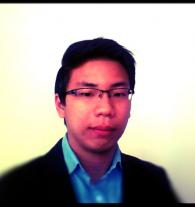
About RAY
Leadership and Mentoring Experience
Ray has hands-on experience guiding younger students as a Form Senior, where he supported Grade 7s through their transition into high school life. He acted as a reliable mentor, providing clear answers to student questions and maintaining an approachable presence. This background gives him a strong foundation in building rapport with students, understanding their challenges, and fostering a welcoming environment—qualities essential for effective tutoring.
Communication Skills and Academic Excellence
Ray’s achievement of the highest mark in the top-level AMEB Speech and Communication exam highlights his exceptional public speaking, presentation, and articulation skills. His ability to communicate complex ideas clearly ensures that he can break down tricky maths or English concepts for students of all abilities. Parents can trust that Ray will help boost both confidence and comprehension in their child’s learning journey.
Creative Approach Through Music and Teamwork
As an accomplished musician performing in leading school ensembles, Ray brings creativity, discipline, and teamwork to his sessions. His involvement in concert bands and percussion groups demonstrates his commitment to excellence and refined time management. Ray often integrates creative examples from music into lessons to make learning engaging, helping students connect new concepts with real-world interests.




Recent Tutoring Comments:
Majed responded well when the research question was broken into smaller sections. This helped him better understand how a research question can guide the ...
Majed responded well when the research question was broken into smaller sections. This helped him better understand how a research question can guide the information and sources he needs to find. He was able to begin identifying specific areas to research rather than approaching the assignment as one large task.
A continuing area for improvement is time management with take-home assignments. I have noticed a pattern where Majed leaves these tasks relatively late, which limits the time available for researching, drafting and improving his work. He would benefit from beginning assignments earlier and breaking them into smaller tasks with clear deadlines. This will allow him to complete his research more independently and leave sufficient time to review and refine his final response.
Majed was able to understand what the different parts of the formula represented and became more confident with substituting the given values into the correct ...
Majed was able to understand what the different parts of the formula represented and became more confident with substituting the given values into the correct places. Breaking the formula down into its individual components helped make the questions easier for him to approach.
Majed still needs more practice with unit conversions, particularly converting between kilometres and metres and recognising which unit is required before using the formula. We will continue reinforcing these conversions so he can independently identify and convert the values before substituting them into formulas.
Majed was able to follow the examples and substitute numbers into the formulas when guided. He showed a developing understanding of how circumference and arc length ...
Majed was able to follow the examples and substitute numbers into the formulas when guided. He showed a developing understanding of how circumference and arc length questions are structured and was able to complete calculations once the correct formula had been identified.
Majed's main area for improvement is becoming more familiar with the formulas and understanding what each symbol represents. He sometimes needed help deciding which formula to use before starting the calculation. With more practice identifying the radius, angle, and the information required by each question, he should become more confident in selecting the correct formula and substituting the numbers independently
Majed was able to understand the basic idea of moving between units and began to recognise whether he needed to multiply or divide depending on the direction of the ...
Majed was able to understand the basic idea of moving between units and began to recognise whether he needed to multiply or divide depending on the direction of the conversion. Breaking the conversions into individual “jumps” made the process easier for him to visualise and follow.
Majed still needs practice understanding why each conversion works rather than simply memorising the multiplication or division rules. He also found conversions involving more than one step more challenging, such as metres to millimetres, where he needs to recognise that 1 m = 100 cm and 1 cm = 10 mm, therefore 1 m = 1000 mm. We will continue practising multi-step conversions so he can apply the method independently rather than relying on memorisation.