

 Verified Tutor

What do I enjoy most about tutoring? 😁
The feeling that I've helped someone understand a concept or idea that they didn't understand prior to me teaching them.My Strengths as Tutor 💪
- I am passionate about what I do - I am able to help people understand things without directly explaining it to them via starting with the fundamentals - I am able to understand what my students don't understand about a conceptMost important things I can do for a student 🏅
- Help students understand the subject - Help students enjoy the subject - Be a good influence on them in both the subject and all fields of lifeSubjects Tutored 🎓
- Physics tutoring in Burwood
- Chemistry tutoring in Burwood
- Maths tutoring in Burwood
- Science tutoring in Burwood
Exam Prep 📝
- Naplan tutoring
- HSC tutoring
Tutoring students in 👦 👧
- year 1
- year 2
- year 3
- year 4
- year 5
- year 6
- year 7
- year 8
- year 9
- year 10
- year 11
- year 12
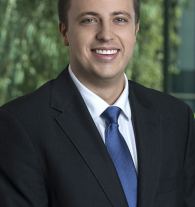
About Benjamin
Strong Maths Background with Proven Achievement
Benjamin is a high-achieving maths student who studies advanced and extension Mathematics alongside senior English. He has earned multiple distinctions in national mathematics competitions, showing not just talent but consistent effort and problem-solving ability. This tutor is highly numerate and confident working through challenging questions, from core skills to extension topics. Parents can be assured that Benjamin understands the syllabus deeply and can clearly explain concepts in ways that help students build both accuracy and confidence.
Clear Communicator Who Enjoys Teaching
Benjamin genuinely enjoys teaching and has actively sought opportunities to help others understand maths. With strong written and verbal communication skills, he breaks down complex ideas into simple, step-by-step explanations. He is patient, approachable, and comfortable working with different personalities and learning styles. This tutor focuses on making students feel safe to ask questions, turning confusion into “lightbulb moments” and encouraging students to talk through their thinking rather than just memorise methods.
Well-Rounded Role Model and Study Mentor
Beyond the classroom, Benjamin is involved in cadets and a wide range of sports including soccer, cricket, swimming and cross country. These experiences have strengthened his discipline, teamwork and leadership—qualities he brings into tutoring sessions. He helps students with more than just answers, guiding them on exam strategies, time management and how to stay calm under pressure. As a current senior student himself, he relates well to younger learners and can share practical, up-to-date study habits that actually work.






Recent Tutoring Comments:
Using the remainder theorem to calculate the roots of a polynomial and polynomial long division.
Using the remainder theorem to calculate the roots of a polynomial and polynomial long division.
Conceptualising polynomial long division with changes to the nature of the polynomials at play.
After setting up the table, Luca was able to effectively use it to calculate probabilities.
After setting up the table, Luca was able to effectively use it to calculate probabilities.
Luca is still figuring out how to set up the table and how it can be set up using the circumstances you're given.
Luca is learning the skills needed to solve the bearing questions such as finding the angles and how to apply the formulas
Luca is learning the skills needed to solve the bearing questions such as finding the angles and how to apply the formulas
Sometimes Alex doesn't use the best method to solving these questions - e.g. using sine rule when cos rule could be used, or just forgetting to use pythag. He's also still working on all the various angle-finding techniques.
Luca was able to learn how to use trig applications in base triangles and also how to find the angle using inverse trig functions
Luca was able to learn how to use trig applications in base triangles and also how to find the angle using inverse trig functions
I don't think Luca understands what inverse trig functions are conceptually yet, so it would be good to cover that. That said, I think it should be fine so long as he knows how to use them.