

Raphael has been great with both boys, they really like him and his enthusiasm is wonderful! He comes prepared with resources and materials that he thinks will help them from the previous lesson- he is working out very well so far.Debra
Year 8 student Sarah explored the difference between linear and non-linear relationships by plotting data on graphs and converting word problems into equations.
In Year 10, Liam practised using the quadratic formula to solve quadratic equations and worked on expanding and simplifying expressions with surds and indices.
Meanwhile, Year 12 student Alex focused on complex numbers, including arithmetic with complex conjugates, understanding modulus properties, and converting between polar and Cartesian forms using visual representations on the complex plane.
A Year 8 student repeatedly avoided writing out full working in algebra, as noted: "he skipped showing steps in algebra, which hid sign errors." This led to confusion and made it harder to pinpoint mistakes.
In Year 11 Chemistry, another student's notes were sparse—key diagrams and raw data tables missing from the report meant more time was spent searching for information instead of analysing results.
Meanwhile, a Year 5 learner guessed answers when under time pressure in maths, leading to repeated miscalculations and a visible dip in confidence after each error.
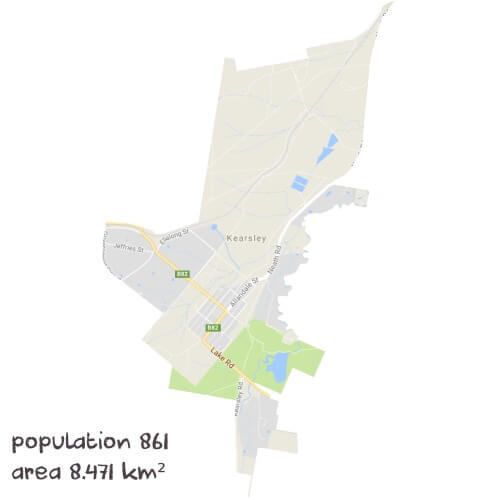
One Kearsley tutor noticed a Year 11 student who used to rely on step-by-step guidance now tackling calculus problems independently, even asking for extra questions beyond the syllabus.
In Year 9 English, another student who previously hesitated to contribute ideas has begun structuring persuasive speeches with clear arguments and confidently including rhetorical devices without prompting.
Meanwhile, a primary student recently surprised her tutor by rounding whole numbers unaided and explaining her reasoning aloud, a shift from her earlier habit of waiting for hints before answering.