

Jimmy broke things down and explained them really well and Ruby was comfortable.
Olivia


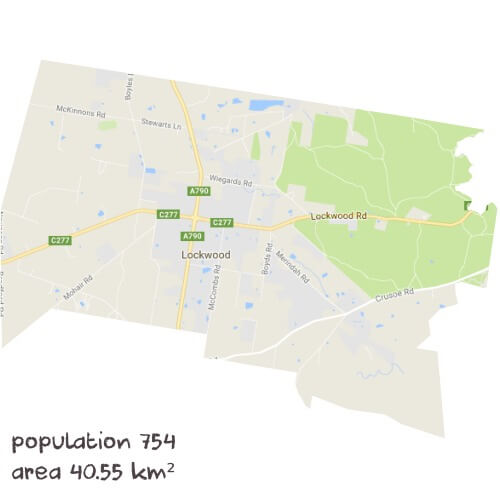
Tutors in Lockwood include a secondary teaching specialist with years of classroom and private tutoring experience, an award-winning science graduate with an ATAR 97.8, accomplished university STEM mentors, maths and literacy peer tutors, a Federation University medalist in English, and dedicated educators skilled in supporting K–12 learners both academically and personally.

Jimmy broke things down and explained them really well and Ruby was comfortable.Olivia
Year 7 student Zane worked through linear equations and interpreting worded algebra problems, with a focus on step-by-step reasoning.
Year 8 student Ella practised writing research in her own words for English and applied the Pythagoras theorem to solve right-angled triangle questions.
Meanwhile, Year 5 student Sophie revised fractions by identifying equivalent values and representing them accurately on a number line using visual aids.
In Year 9 maths, one student struggled to distinguish between addition and multiplication of fractions, as noted: "switching between addition and multiplication can be tricky," leading to repeated errors on homework.
In Year 11, a missed opportunity arose when a test wasn't available for review; this blocked targeted feedback and reflection on mistakes.
For a Year 4 learner, incomplete spelling homework meant key words weren't learned in time for class.
During Year 7 lessons, messy handwriting made it difficult to track working in multi-step problems—this slowed checking and increased frustration during revision sessions.
In Year 11 maths, Quinn had previously struggled with composite functions but now explains the steps confidently and even worked ahead of his class's curriculum during a session.
A Year 8 student who used to hesitate when faced with worded problems is now tackling them independently, actively recognising what information is needed before attempting a solution.
Meanwhile, one younger learner who was once reluctant to ask for help has started communicating clearly when she doesn't understand a concept—last week she raised her hand and asked for clarification rather than guessing.