
Kajal is a lovely girl. Her teaching methods really suit my young 17 year old daughter.
Sally Mcgreal


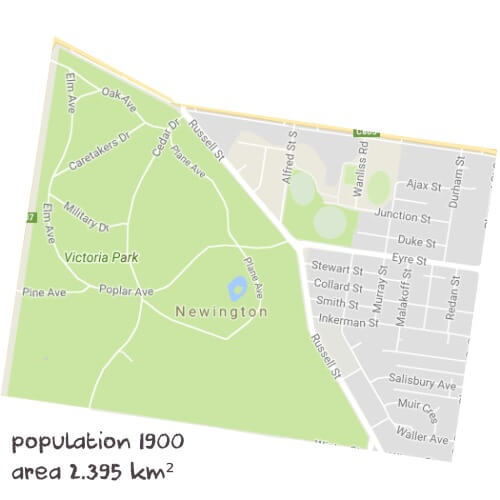
Tutors in Newington include a K–12 specialist with over a decade of teaching and leadership across Australia and Asia, an ATAR 97.8 maths and physics tutor, experienced youth mentors, a Dux with top subject awards, university-trained educators, performing arts coaches, and accomplished peer tutors from selective schools—all passionate about supporting students' growth.

 Seasoned
  Outstanding
 Skilled
  Standard
  Seasoned
Standard
Seasoned
Standard  Seasoned
Standard
Skilled
Standard
Skilled
Standard
Seasoned
Standard
Skilled
Standard
Skilled
Standard Kajal is a lovely girl. Her teaching methods really suit my young 17 year old daughter.Sally Mcgreal
Year 4 student Greta practised **multiplication strategies** including the lattice method and used factor trees to explore how factors and multiples connect to equivalent fractions.
In Year 9, Tom worked on **trigonometry by applying SOH CAH TOA** and practicing both sine rule and cosine rule with diagrams.
For Year 10, James tackled **simplification and rationalising of surds** as well as set theory concepts, reviewing his previous test to strengthen understanding of non-numerical coefficients in linear expressions.
In Year 11, a student hesitated to show working when rationalising surds and factoring, leading to repeated arithmetic errors. As one tutor noted, "they skipped showing steps in algebra, which hid sign errors."
In Year 9 maths, confusion about when to apply rules—such as misusing the cosine rule without considering angle placement—slowed progress on test questions.
Meanwhile, a primary student's reliance on visual fraction models made it hard to handle more complex denominators; she would often "leave answers blank instead of asking for help," which meant teachers couldn't identify misunderstandings before moving on.
A tutor in Newington recently saw a Year 9 student shift from hesitantly attempting equations to confidently applying the quadratic formula with minimal guidance, forming their own equations after some initial support.
In a Year 11 session, a student who previously struggled to identify which trigonometric ratio to use began drawing and labelling triangle diagrams independently, correctly choosing between sine, cosine, or tangent without prompting.
Meanwhile, a younger primary student who used to make repeated errors when finding fractions of arrays is now grouping dots accurately and recognising equivalent fractions visually by counting rather than guessing—she completed several exercises with only one minor mistake.