

 Verified Tutor
What do I enjoy most about tutoring? 😁
The most enjoyable aspect about tutoring would probably be leading others through their academic plateaus, and seeing a student's "aha" moment as they finally understand a question or master a concept. It's a fulfilling feeling to see students improve in their studies and self-confidence by sharing your knowledge.My Strengths as Tutor 💪
I pride myself in communicating my ideas well and adapt flexibly to the needs of different individuals. Being a past student mentor and guiding struggling primary school students through coursework. I am able to succinctly vocalise ideas and accomodate teaching style to suit different students. Also having schooling experience in 4 units of math and units of english, I possess a fortified understanding of junior K-6 concepts and senior year 7-10 content. This allows me to offer proper and accurate guidance for students.Most important things I can do for a student 🏅
The most important thing a tutor could probably do is to make the process of learning an enjoyable experience, and engaging the student constantly to form their own thoughts and ideas. A positive mindset to learning is the pivot to academic progress, and without enjoyment students will reach a mental plateau. High engagement with students also encourage a proactive approach towards learning which allows students to understand content faster.Subjects Tutored 🎓
Exam Prep 📝
- Naplan tutoring
Tutoring students in 👦 👧
- year 2
- year 3
- year 4
- year 5
- year 6
- year 7
- year 8
- year 9
- year 10
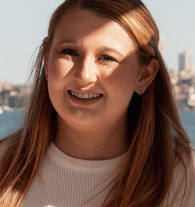
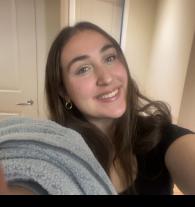
About Jesslyn
Brings organized and personalized tutelage
Jesslyn is an experienced tutor and leader with a background in volunteer student mentoring. She customizes lesson plans to suit each student’s needs and study habits, using creative techniques and a variety of resources like exercise booklets and sample answers to make learning engaging. Her personalized approach not only strengthens students' understanding but also helps them develop long-term study skills, building confidence and independence for future academic success.
Passionate in her field of work
Jesslyn is a hardworking individual who balances her role as a part-time design and marketing assistant in real estate with her schoolwork. Known for her commitment to excellence, she consistently completes tasks with precision and dedication. With aspirations to pursue a bachelor’s degree in clinical psychology, Jesslyn is interested in science and brain development. She brings this same passionate drive to her tutoring role, where she supports students with care and diligence. Her positive attitude and creativity create a safe, encouraging space for learning, helping students build confidence and adopt a growth mindset.
Extensive knowledge in tutored subjects
Jesslyn has excelled in Advanced English, Extension 1 English, and both Advanced and Extension 1 and 2 Mathematics, giving her a deep understanding of these subjects. She draws from her own experiences, achievements, and challenges as a student to guide others toward success, offering insights that make complex concepts more accessible. Equipped with a wide range of educational tools, including self-written sample Band 6 essays and past exam papers, Jesslyn provides students with valuable resources to help them succeed.




Recent Tutoring Comments:
Student has improved further in her English syntax, devising thoughtful arguments and arranging them in a logical manner. Student has utilised multiple techniques ...
Student has improved further in her English syntax, devising thoughtful arguments and arranging them in a logical manner. Student has utilised multiple techniques naturally such as rhetorical devices to engage the audience. Student is very fast with her mental math, and was able to grasp algebra intuitively given a few pointers. She understood how to find missing measurements given the area and perimeter as well.
Student was advised to employ further language techniques like personification in her speech to paint imagery. As for math, student has trouble employing knowledge of varying math concepts to solve these multistep questions, and is encouraged to familiarise herself with division and area calculation.
Student could now distinguish the height, width and length within 3D volumes and compound volume questions. She did a lot of the surface area calculations with ...
Student could now distinguish the height, width and length within 3D volumes and compound volume questions. She did a lot of the surface area calculations with limited tutor guidance and was careful to subtract overlapping surface areas of compound volumes. Student has also gotten very good with double and even simple three digit addition.
Student struggles a little with visualising complex 3D volume structures, so it helps to use a real life 3D model sometimes to map out the measurements. Student struggles in analysing and comprehending authorial meaning behind text and the significance of language techniques.
Student understood how to find area measurements using the formulas provided, quickly linking relevant formula to different shapes. Student also understood that ...
Student understood how to find area measurements using the formulas provided, quickly linking relevant formula to different shapes. Student also understood that cubic metric conversions were solved by cubing conversion factors from previous length conversions. Furthermore, student learnt calculation of 3D prisms through multiplying the front face by the extended length. This core concept helped her solve questions with minimal guidance. As for English, students sentence structure has improved and become more coherent.
Student did not do her homework. Also has difficulty identifying height, length and width in compound volume questions. For the English homework component, she still has some slight trouble spelling tier 1 words like ‘slowly’. Forgets to incorporate english personification techniques expressing emotions within her creative writing.
Student understood that probabilities were multiplied in multi event scenarios and linked mathematical working to probability trees. Student got better at ...
Student understood that probabilities were multiplied in multi event scenarios and linked mathematical working to probability trees. Student got better at distinguishing dependent events from independent and used appropriate methods as a result. As for the English component, student created some powerful ‘show not tell’ sentences and integrated higher vocabulary to enchanted her sentences.
For English, student is to practice expanding her vocabulary to implement in her stories. As vocabulary and description convey the atmosphere of the piece, student is asked to be selective about how she uses her language techniques, employing ‘personified emotion’ to convey a character’s feelings. Student should also reread her work and make corrections.