

 Verified Tutor

What do I enjoy most about tutoring? 😁
I love helping people. Seeing a student flourish is something wonderful and gives you a great sense of fulfilment. This motivates me to try and help more people. I have also been in the position of these students and remember the times when my tutors and teachers have been absolutely instrumental in my development and would love to be given the opportunity to express my gratitude for those times by now becoming a tutor. I would love to instill confidence in students about their own skills just like I had gotten from my tutors.My Strengths as Tutor 💪
I am a good listener which means that I would carefully listen to all my students have to say. Taking into consideration their views would allow us to work together more constructively to achieve better outcomes. Being open to listening not only allows me to improve, but ensures that I truly am meeting the needs of the student as the student should be the priority. I also believe that I am a highly motivated person with a strong drive to achieve. This means that I invest 100% all the time and dedicate myself to whatever work that I do. This means that I would be committed to aiding students.Most important things I can do for a student 🏅
Be encouraging and readily available. Tutoring is all about allowing students to reach their inner potential by giving them the extra push & extra support. This means that tutors need to be encouraging towards their students to instill that confidence in them. Boosting morale pays dividends and means that students are more likely to achieve their goals. During VCE, I also realized how important it was that my tutors were accessible. Their ready availability allowed me to get any doubts I had swiftly clarified and compounded the encouragement I received in class which was pivotal.Subjects Tutored 🎓
- Physics tutoring in Taylors Hill
- Chemistry tutoring in Taylors Hill
- Maths tutoring in Taylors Hill
- Science tutoring in Taylors Hill
- English tutoring in Taylors Hill
Exam Prep 📝
- Naplan tutoring
Tutoring students in 👦 👧
- year 1
- year 2
- year 3
- year 4
- year 5
- year 6
- year 7
- year 8
- year 9
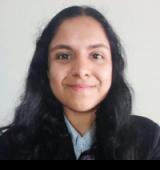
About Ananya
Student with Excellent Academic Record
Having graduated from one of Victoria's Selective Schools, Ananya's diligence has allowed her to perform consistently well across various subjects. She exhibits strong results in mathematics especially, which has built a strong foundation for her as she undertakes a Bachelor of Software Engineering. She has also received awards for her love of learning and aims to instill the same enthusiasm in her students.
Dedicated and Passionate Tutor
Ananya is a great team player and ensures that the students she works with are left well equipped with the skills and knowledge needed to face their assessments. Her exceptional team spirit and previous experience working with children allows her to easily connect with students. Her strong communicational & organizational skills ensures that students are provided adequate support, demonstrating her commitment to her students.
Friendly and Encouraging Person
Her friendly demeanor along with her gentle encouragement invites students to feel comfortable and open to discussing their doubts. It also allows them to develop confidence quickly and ensures that students truly grasp content. Ananya also provides ongoing support to assist students in their journey to success!





Recent Tutoring Comments:
- could read coordinates correctly - identifying that the x-axis is read first and then the y-axis is read - demonstrated the ability to plot coordinates correctly ...
- could read coordinates correctly - identifying that the x-axis is read first and then the y-axis is read - demonstrated the ability to plot coordinates correctly most of the time - could identify the shape created by plotted coordinates - showed an understanding of where to plot a coordinate in order to create a shape
- when plotting a coordinate, try to use the given coordinates to help you recognise the pattern - how coordinates have been moved - always try to draw a small diagram of what the shape you are trying to make looks like
- recalled that an equilateral triangle is a type of triangle and that each of the side lengths were equal - could find the missing interior angle in a triangle - ...
- recalled that an equilateral triangle is a type of triangle and that each of the side lengths were equal - could find the missing interior angle in a triangle - could classify different triangles based on their properties - showed some understanding of how to find the missing angle x given different interior and exterior angles
- when classifying triangles, try not to base your judgement off the looks, use the side lengths (ticks) to back it up - try and relate angles back to base angles such as straight angles to find the missing angle
- could recall most of the different types of angles - could confidently read the measurements on a 180 deg protractor - demonstrated an understanding of how to ...
- could recall most of the different types of angles - could confidently read the measurements on a 180 deg protractor - demonstrated an understanding of how to find missing angles along a straight line, around a point and various shapes
- when reading a protractor, especially a 360 deg protractor, make sure that you keep track of which row of values you are reading - also ensure that you are reading it in the correct direction - getting larger, not smaller - when trying to find the degree you are measuring, ensure that you always measure the angle that is enclosed by the lines
- could recall most of the different types of angles - showed some understanding of how to estimate the size of different angles - could compare different ...
- could recall most of the different types of angles - showed some understanding of how to estimate the size of different angles - could compare different angles - used the complementary angle to find the measured angle
- when measuring angles using a protractor, ensure that you read the correct row of number and in the correct direction (getting larger) - when estimating angles, try to draw out the different lines to get an idea of where major steps like 90 deg would be