

 Verified Tutor

What do I enjoy most about tutoring? 😁
What I enjoy most about tutoring is helping students grow in confidence and understanding, especially when the content can feel overwhelming at first. I find it very rewarding to watch students gradually grasp difficult ideas, develop effective problem-solving skills, and realize they are capable of achieving strong results with the right guidance. I also enjoy breaking down complex concepts into clear, practical explanations that suit each student’s learning style.My Strengths as Tutor 💪
I believe my main strengths as a tutor are patience, reliability, and problem solving. My patience allows me to explain concepts at a pace that suits any student, ensuring they fully understand the material before moving on. Being reliable means students can count on me to be well-prepared, consistent, and focused during every session. Additionally, my problem solving skills help me find creative ways to break down challenging questions and guide students toward understanding. Together, these strengths allow me to support students effectively, helping them build confidence in their learning.Most important things I can do for a student 🏅
I believe the most important things a tutor can do for a student are to build understanding, confidence, and independence in learning. A tutor should provide clear explanations tailored to the student's needs, ensure concepts are fully understood, and encourage active problem solving rather than giving answers. Creating a supportive and patient learning environment helps students feel comfortable asking questions and making mistakes. Ultimately, an effective tutor equips students with the skills and confidence to approach challenges independently and achieve long term academic success.Tutoring students in 👦 👧
- year 2
- year 3
- year 4
- year 5
- year 6
- year 7
- year 8
- year 9
- year 10
- year 11
- year 12
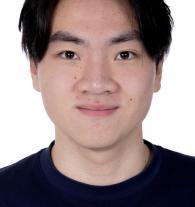
About Kevin
High-achieving maths specialist who understands the school system
Kevin is a recent selective high school graduate with strong results in advanced Mathematics and Geography, consistently placing near the top of his cohort. He has a solid grasp of core and extension maths, and knows exactly what classroom teachers and exam markers are looking for. This tutor focuses on building clear conceptual understanding first, then reinforcing it with exam-style questions so students feel confident, not just drilled.
Proven peer mentor who lifts classmates’ results
Throughout his final year of school, Kevin regularly mentored classmates during study periods and breaks, averaging about an hour each week. He specialises in breaking down difficult ideas into simple, step-by-step explanations and sharing practical problem-solving strategies. One classmate he supported moved from the bottom group in Mathematics Advanced to achieving a result in the top band range, showing that his approach can translate into real improvement.
Strategic, analytical thinker who makes learning engaging
Outside the classroom, Kevin is an accomplished chess player who has won multiple local heats and competed in high-level interschool finals. He brings this same strategic thinking into his tutoring, teaching students how to plan their working, spot patterns, and avoid common traps in exam questions. Lessons with this tutor are calm, structured, and focused, with a friendly atmosphere that encourages students to ask questions and stay curious about maths.







Recent Tutoring Comments:
Student showed exceptional understanding of coordinates, and was able to easily interpret information given by a map to answer questions (Questions such as ...
Student showed exceptional understanding of coordinates, and was able to easily interpret information given by a map to answer questions (Questions such as identifying which coordinates a specific feature was located, and finding the shortest distance between 2 points)
While the student's understanding of this topic is solid, he should slow down and practice double checking over his work to avoid making silly mistakes.
Student had a good understanding of basic numeric and geometric patterns. For numeric patterns, the student was able to identify patterns which ...
Student had a good understanding of basic numeric and geometric patterns. For numeric patterns, the student was able to identify patterns which added/subtracted/multiplied/divided by a constant value, and apply these patterns to find missing terms. For geometric patterns, student was also able to solve basic patterns involving a sequence of shapes, and predict the next shape in the pattern.
Although the student was confident with pattern questions involving missing terms at the END of the sequence (such as 2, 4, 6, _ , _), he was less confident with questions where some of the STARTING terms were missing (such as 2, _, 8, 16, _). Furthermore, the student is encouraged to do plenty of practice questions in order to understand how to identify and deal with more complex patterns
Student was able to quickly grasp the method used for calculating elapsed time, and applied this formula accurately in multiple questions. Student also showed good ...
Student was able to quickly grasp the method used for calculating elapsed time, and applied this formula accurately in multiple questions. Student also showed good understanding of basic timezone questions
No serious issues in this lesson. Student is advised to do plenty of practice questions (particularly for timezones) in order to reinforce his understanding and improve on harder, more complex questions.
Student had a solid understanding of time conventions and was able to easily convert between 12hr and 24hr time.
Student had a solid understanding of time conventions and was able to easily convert between 12hr and 24hr time.
No notable issues in this lesson. Student is encouraged to do plenty of practice questions.