

 Verified Tutor

What do I enjoy most about tutoring? 😁
I like that I can play an active role in someone else’s education and I like the overall idea of being part of their journey. Since I have just ended my high school education, I understand and find the struggles of a student relatable. Furthermore, connecting with them on a more personal level helps me understand how I can help them a little bit more.My Strengths as Tutor 💪
Adapting to the students strenghts and weaknesses. Through my experience as an auxiliary teacher, I learned that every student learns at a different pace and each have their personal end goal. I have learned that it is important to alter tutoring approches according to their style, such they can learn effectively and on their own time. Since I am still learning, I am also receptive to feedback and always looking for ways to improve my teaching so that I can better support my students' learning.Most important things I can do for a student 🏅
Communication and honesty. Attending supplementary classes is one thing, but knowing whether the students are actually learning is another hurdle on its own. It is important to keep communicating effectively with students, to know whether the lessons are helping them or not, while students truthfully tell their tutors what they are struggling in, and not fake the results they have. This is so that sessions held are utilised to its full potential.Tutoring students in 👦 👧
- year 3
- year 4
- year 5
- year 6
- year 7
- year 8
- year 9
- year 10
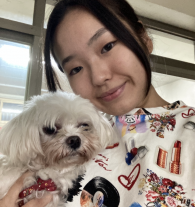
About Khairun Nabihah
Supportive Maths & English Help from a Psychology Student
Khairun is an undergraduate psychology student who tutors primary and lower–secondary students in Mathematics and English. She has worked closely with students who find school challenging, including those with lower cognitive abilities and learning difficulties, so she understands how to break work into manageable steps and explain concepts in different ways. Drawing on her studies in psychology and linguistics, she pays attention to how each child learns best and adapts examples, questions and practice tasks to suit their level and pace.
HandsOn Classroom and OnetoOne Teaching Experience
As an auxiliary teacher attached to a lowersecondary class, this tutor supported students in class and through individual tutoring in Maths and English. She collaborated with classroom teachers to reinforce key skills, helped students prepare for assessments, and created a calm, safe environment where asking questions was encouraged. Earlier, as an assistant teacher for children aged 3–7, she helped manage smallgroup activities, guided early literacy and numeracy tasks, and kept young learners focused through simple routines and engaging exercises.
Calm, Confident Communicator Who Builds Student Confidence
Khairun’s background as a class leader and peer support leader means she is used to listening carefully to students and noticing when they are stressed or stuck. She has organised classbonding activities and led drama sessions, giving her strong communication skills and a warm, approachable presence. In tutoring, she uses these strengths to build rapport quickly, encourage shy students to speak up, and turn mistakes into learning opportunities, so students gradually become more confident and independent in Maths and English.








Recent Tutoring Comments:
Archie is doing better, and with more confidence, questions on circle geometry. He is able to correctly identify the key clues of the question and identify what ...
Archie is doing better, and with more confidence, questions on circle geometry. He is able to correctly identify the key clues of the question and identify what theorems are best used in different situations. As for sine rule and cosine rule, he is now able to identify properly when and now to use the formulas, and the exact values to substitute in each case.
As for sine and cosine rule, it can be quite confusing to know which of the two is used in which question. The important thing about the application of these formulas is whether or not the question gives two angle-side pairs or not. Usually each question gives three known values and one unknown value. If there are two angle-side pairs (three known values and an unknown) that is where sine rule is used. Otherwise, cosine rule is the way to go.
As the topic was already briefly taught about last few weeks, before the test, Anny already knows and grasps the understanding of rectangular hyperbolas quite well. ...
As the topic was already briefly taught about last few weeks, before the test, Anny already knows and grasps the understanding of rectangular hyperbolas quite well. She is able to identify the asymptotes of different rectangular graphs and sketch them with little to no mistakes. Moreover, her skills in knowing which quadrant to draw the graph in have also increased compared to last month.
Nothing too crucial to take note of. She does take quite some time to understand that sometimes a rectangular hyperbolas may have asymptotes that lie on the axis. It is not that there is no asymptotes for such examples, but rather the axis itself is the asymptote. Otherwise, she has good understanding of the concepts of rectangular hyperbolas.
Quinn was in a great mood and was really enthusiastic answering the questions ahead of her. Her positive approach itself was an achievement. I hope to see such ...
Quinn was in a great mood and was really enthusiastic answering the questions ahead of her. Her positive approach itself was an achievement. I hope to see such lively attitude towards maths in the future too! She remembers well her skills and concepts which made it easier for her to understand the other skill that was taught today, that is, adding or subtracting by looking at patterns in number placements
Nothing crucial to be improved as of today. However in addition, although she is already quite good at it, it is important to remember to take things one step at a time. For example, adding the ones before the tens as there may be cases of "carry the one" and the tens values changing instead.
We went through the theorems with deeper understanding how to apply them in questions. Archie understand well and does remember quite a bit the use of the theorems ...
We went through the theorems with deeper understanding how to apply them in questions. Archie understand well and does remember quite a bit the use of the theorems with no problem.
It does take a while for him to know which therems to use for certain types of question. Knowing the theorem is one thing, but knowing which one is suitable in which context is also another thing. One tip is to understand the question and figure well, identify what you already know from the question, and identify what the question wants. After which, slowly work backwards from the unknown angle towards the known figures. You can then eliminate certain theorems and find those that can be applied to answer the question.