
Aldana was extremely pleased with Isabella and the first class went really well. She explained the lesson in an easy to understand manner and made the learning process fun along the way.Gabriella
Year 6 student Elise worked on adding and subtracting fractions with unlike denominators and completed a worksheet on reading comprehension.
In Year 9, Amelie focused on quadratic equations, including using vertex form to graph parabolas and root-finding methods like the discriminant.
Another high school student, Michael, practised algebra skills by reviewing difficult test questions and solving problems involving writing and simplifying expressions.
In Year 6 English, one student repeatedly assumed what worksheet questions required without reading them fully, leading to confusion and missed details—she continues to do this, despite my constant insistence that she read all text on the worksheet.
In Year 10 Mathematics, another student's working out was very haphazard, making it difficult for both student and tutor to follow or review solutions.
Meanwhile, a Year 12 student lost marks by providing answers in the wrong format during tests.
Unfinished homework across several grades often meant lesson time was spent catching up instead of consolidating or extending learning.
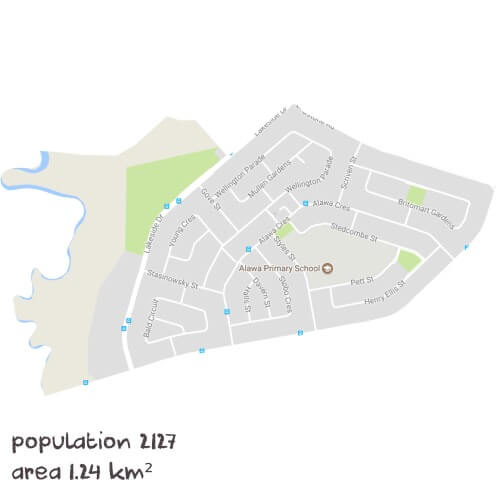
One Alawa tutor recently noticed a big shift with Amelie, a Year 11 student, who now confidently identifies where she went wrong on maths tests and independently corrects her mistakes—something she hesitated to do before.
In another high school session, Aymen moved from struggling to visualise composite shapes to accurately breaking them down for area calculations, and even scored 46 out of 55 on his last test.
For a younger learner, Elise (Year 5) has started outlining every step in multi-step problems out loud before solving, rather than just guessing quietly as she did in earlier lessons.