
Find tutor 🔍
How much tutoring does your child need?

Download a Year 3 Writing test: Choose Practice Test 1, 2 or 3. Each card lists the question paper and every matching answer or review file.
Year 3 NAPLAN Writing includes three free Ezy Math practice tests. Each card names the writing prompt, response booklet, exemplars and marking commentary.
For a first NAPLAN year, familiarity matters more than squeezing in extra papers. Let your child learn the routine without making the result feel like a verdict.
For families approaching NAPLAN for the first time, this page helps you discuss a piece of writing without turning the review into a hunt for spelling mistakes. Start with whether the ideas make sense to the reader, then look at organisation, sentences, word choice, punctuation and spelling.
Year 3 NAPLAN Writing practice tests
Start with the question paper and keep the exemplars and examiner commentary closed until your child finishes. Do not interrupt to correct mistakes. At this age, let your child plan, draft and revise independently so the finished piece shows what they can currently control.
Open the writing prompt first. Use the response booklet for the attempt, then open the exemplar and marking guide to discuss ideas, structure, language and revision.
While you review the paper together, read the response for meaning first, then look at paragraph purpose, sentence control and the changes made during revision.
Writing Practice Test 1
For the first paper, read the finished piece for meaning before checking spelling, punctuation or handwriting. Stay nearby for practical reassurance, but let the answers show what your child can do without coaching.
What you can download:
- Download Writing prompt (PDF, 1 page)
- Download Writing exemplar booklet with criterion-based educator commentary (PDF, 31 pages)
- Download Reusable writing response booklet (PDF, 5 pages)
Writing Practice Test 2
After one short practice focus, look for a clearer idea, stronger organisation or more useful revision. A short, calm learning block is more useful at this age than repeating a complete test the next day.
What you can download:
- Download Writing prompt (PDF, 1 page)
- Download Writing exemplar booklet with criterion-based educator commentary (PDF, 31 pages)
- Download Reusable writing response booklet (PDF, 5 pages)
Writing Practice Test 3
When your child is ready for a fresh try, check whether your child can make the same improvements with a fresh prompt and no reminders. Use the final paper only when the format feels familiar and your child is ready for another independent try.
What you can download:
- Download Writing prompt (PDF, 1 page)
- Download Writing exemplar booklet with criterion-based educator commentary (PDF, 31 pages)
- Download Reusable writing response booklet (PDF, 5 pages)
What Year 3 NAPLAN Writing covers
NAPLAN Writing asks students to create a response to a prompt. The prompt may call for narrative or persuasive writing. These practice tests help your child develop ideas, organise paragraphs, control sentences, choose vocabulary and leave time to revise.
NAPLAN Writing asks for one continuous response to a prompt in either narrative or persuasive form. The text type is revealed on the day, and students do not choose between the two forms.
Year 3 completes Writing on paper. Students in Years 3 and 5 receive prompts from a different prompt group from Years 7 and 9, while all students on a given test day are asked to write the same text type.
The six cards below explain the main parts of Year 3 Writing in parent-friendly terms. Read the cards that match what you saw in your child’s work. You do not need to explain every mistake or use every card.
Year 3 is the first scheduled NAPLAN year. The six Writing cards below explain what a parent can look for without expecting the child to understand assessment language.
At this level, a clear central idea, an order the reader can follow and complete sentences matter more than impressive words or a long response.
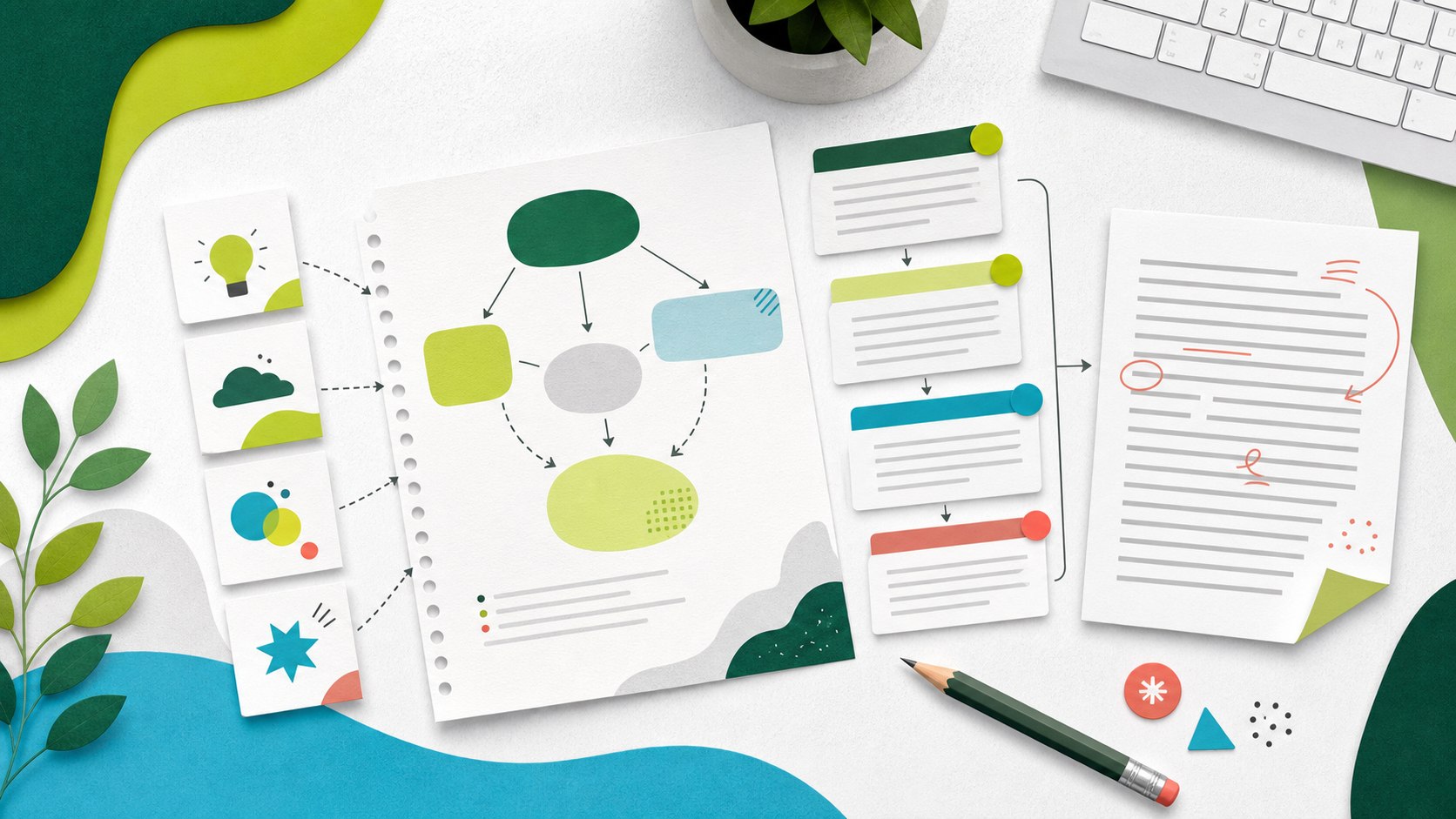
- Plan ideas
Choose the purpose, audience and strongest ideas.
- Organise paragraphs
Group related ideas in an order the reader can follow.
- Draft
Turn the plan into complete sentences and paragraphs.
- Revise
Improve meaning, structure, word choice and accuracy.
Year 3 Writing skill map
1. Audience and clear purpose
What this part checks: Writing so a reader can understand the situation, position or story, with an evident reason for the text.
What your child may be asked to do: A prompt may ask for a narrative or persuasive response, and the writing must stay recognisable as that text type.
What to look for afterwards: Can a reader tell what the writer wants to show or argue without the writer explaining it afterwards?
2. Beginning, sequence and ending
What this part checks: Organising a simple narrative or persuasive structure with a meaningful beginning, ordered middle and ending.
What your child may be asked to do: Plan a small number of story events or reasons before writing, then keep them in a sensible order.
What to look for afterwards: Does each part move the response forward, or are events and reasons listed without connection?
3. Ideas with concrete detail
What this part checks: Developing one central idea with relevant actions, descriptions, reasons or examples.
What your child may be asked to do: Turn a broad idea such as a surprising discovery or a school improvement into specific details.
What to look for afterwards: Which sentence adds new meaning, and which sentence merely repeats the same idea?
4. Paragraphs and connecting words
What this part checks: Grouping related ideas and using simple cohesive words and references to help the reader follow.
What your child may be asked to do: Start a new paragraph when the event, speaker, place or reason changes.
What to look for afterwards: Do the paragraph breaks reflect meaning, and is it clear who or what each pronoun refers to?
5. Complete sentences and useful vocabulary
What this part checks: Writing complete sentences with clear word order and choosing specific words appropriate to the idea.
What your child may be asked to do: Vary a repeated sentence opening or replace a vague word with one that shows the action or object clearly.
What to look for afterwards: Can each sentence stand as a complete thought, and does the vocabulary fit rather than merely sound difficult?
6. Punctuation, spelling and rereading
What this part checks: Using capitals and sentence punctuation, spelling familiar words and rereading for missing or repeated words.
What your child may be asked to do: Reserve time to check one feature at a time after the draft is complete.
What to look for afterwards: Did the student reread the actual sentence they wrote, or only remember what they intended to write?
Planning example: see how the explanation should work
Prompt idea: A surprising discovery in the school garden.
A simple plan might identify who discovers it, what the object or creature is, what problem follows, and how the story ends. Keep the plan short so the child has energy left for writing.
This example is separate from the practice tests, so you can discuss it without giving away an answer from the papers.
Keep the discussion short and let your child do most of the explaining. Ask what the writer wants the reader to understand, think or feel. Then discuss which detail, paragraph or sentence helps that purpose most. You can also ask: Which part is doing a clear job for the reader, and which part needs development?
After Practice Test 1: Year 3 Writing
Begin with something your child handled well, then discuss one repeated difficulty in simple language.
Ask: Which part is doing a clear job for the reader, and which part needs development?
- Together, read the response aloud and say what the main idea or purpose seems to be.
- For a short follow-up, choose one paragraph and ask what job it does for the reader.
- Before you finish, revise one small section for clearer meaning before correcting spelling and punctuation.
Do not try to fix the whole response at once. Choose one repeated issue that would make the biggest difference to the reader, then revise a short section.
Choose one small activity, keep it manageable, and stop before practice becomes a source of distress.
Your role with a Year 3 child
- Choose a quiet, ordinary workspace and remove unrelated distractions.
- Explain that the practice is for learning how the test works. One paper cannot prove how clever a child is.
- Help with opening, printing or navigating the material, but avoid coaching individual answers.
2026 national context for Year 3 Writing
Writing
73.9% of participating students were reported at Strong or Exceeding nationally.
6.7% were reported as Needs additional support.
These figures describe results across Australia. They do not explain what happened in your child’s attempt. While you review the paper together, read the response for meaning first, then look at paragraph purpose, sentence control and the changes made during revision.
For a Year 3 child, use the national figures only as background. The response itself will show which part of the writing process needs attention next.
A total from an Ezy Math Year 3 Writing practice test is not an official NAPLAN scale score. For a useful next step, use your child’s work rather than a comparison with the national percentage.
Questions parents ask about Year 3 Writing
What should I notice first in a Year 3 Writing attempt?
For the first review, read the whole response once for meaning. First decide whether the reader can follow the idea and structure, then look at sentences, punctuation and spelling.
When should my child open Year 3 Writing Practice Test 2?
A short, calm learning block is more useful at this age than repeating a complete test the next day. Before another full paper, practise the chosen part of writing through a short paragraph or revision task. Use Test 2 only after your child can say what they are trying to improve.
Related NAPLAN resources
If your child still needs help, show the teacher or tutor the full response and one passage that illustrates the problem. Do not bring only a list of spelling mistakes.
Official information used for this guide
The Year 3 Writing format and 2026 national figures were checked against the official NAP and ACARA sources below on 22/08/26.
What they say about our tutoring
Mitchell is happy with the new tutor, thank you. Sean is a good communicator which makes Mitchell feel more relaxed thanks again.
We are very happy with Sheetal. Timothy is making great progress and we are happy to continue. We will have Tim do his Navy test in a few weeks and if we need to do a bridging course we will ask Sheetal to tutor him with that as well.