
Find tutor 🔍
How much tutoring does your child need?

Download a Year 5 Writing test: Choose Practice Test 1, 2 or 3. Each card lists the question paper and every matching answer or review file.
Year 5 NAPLAN Writing includes three free Ezy Math practice tests. Each card names the writing prompt, response booklet, exemplars and marking commentary.
Year 5 children usually know the NAPLAN routine, so practice can shift towards explaining choices and taking more responsibility for checking work.
As your child takes more responsibility for practice, this page helps you discuss a piece of writing without turning the review into a hunt for spelling mistakes. Start with whether the ideas make sense to the reader, then look at organisation, sentences, word choice, punctuation and spelling.
Year 5 NAPLAN Writing practice tests
Start with the question paper and keep the exemplars and examiner commentary closed until your child finishes. Do not interrupt to correct mistakes. During a Year 5 attempt, let your child plan, draft and revise independently so the finished piece shows what they can currently control.
Open the writing prompt first. Use the response booklet for the attempt, then open the exemplar and marking guide to discuss ideas, structure, language and revision.
During your child’s explanation, read the response for meaning first, then look at paragraph purpose, sentence control and the changes made during revision.
Writing Practice Test 1
To establish a Year 5 starting point, read the finished piece for meaning before checking spelling, punctuation or handwriting. Ask your child to flag uncertain items and keep enough working or notes to make the later review useful.
What you can download:
- Download Writing prompt (PDF, 1 page)
- Download Writing exemplar booklet with criterion-based examiner commentary (PDF, 31 pages)
- Download Reusable writing response booklet (PDF, 5 pages)
Writing Practice Test 2
Once your child has practised a clear priority, look for a clearer idea, stronger organisation or more useful revision. Return after focused practice and ask what your child plans to do differently before opening the paper.
What you can download:
- Download Writing prompt (PDF, 1 page)
- Download Writing exemplar booklet with criterion-based examiner commentary (PDF, 31 pages)
- Download Reusable writing response booklet (PDF, 5 pages)
Writing Practice Test 3
For a later independent check, check whether your child can make the same improvements with a fresh prompt and no reminders. Keep the last set fresh so it can show whether better checking and stronger skill knowledge are carrying into new questions.
What you can download:
- Download Writing prompt (PDF, 1 page)
- Download Writing exemplar booklet with criterion-based examiner commentary (PDF, 31 pages)
- Download Reusable writing response booklet (PDF, 5 pages)
What Year 5 NAPLAN Writing covers
NAPLAN Writing asks students to create a response to a prompt. The prompt may call for narrative or persuasive writing. These practice tests help your child develop ideas, organise paragraphs, control sentences, choose vocabulary and leave time to revise.
NAPLAN Writing asks for one continuous response to a prompt in either narrative or persuasive form. The text type is revealed on the day, and students do not choose between the two forms.
Year 5 completes Writing online. Official marking uses ten criteria, including audience, structure, ideas, vocabulary, cohesion, paragraphing, sentence structure, punctuation and spelling, plus form-specific criteria for narrative or persuasive writing.
The six cards below explain the main parts of Year 5 Writing in parent-friendly terms. Read the cards that match what you saw in your child’s work. You do not need to explain every mistake or use every card.
Compared with Year 3, Year 5 Writing asks for more independence and more explanation of the choices made.
Year 5 writers need to develop ideas with useful details and give each paragraph a clear job, while beginning to revise meaning as well as surface errors.
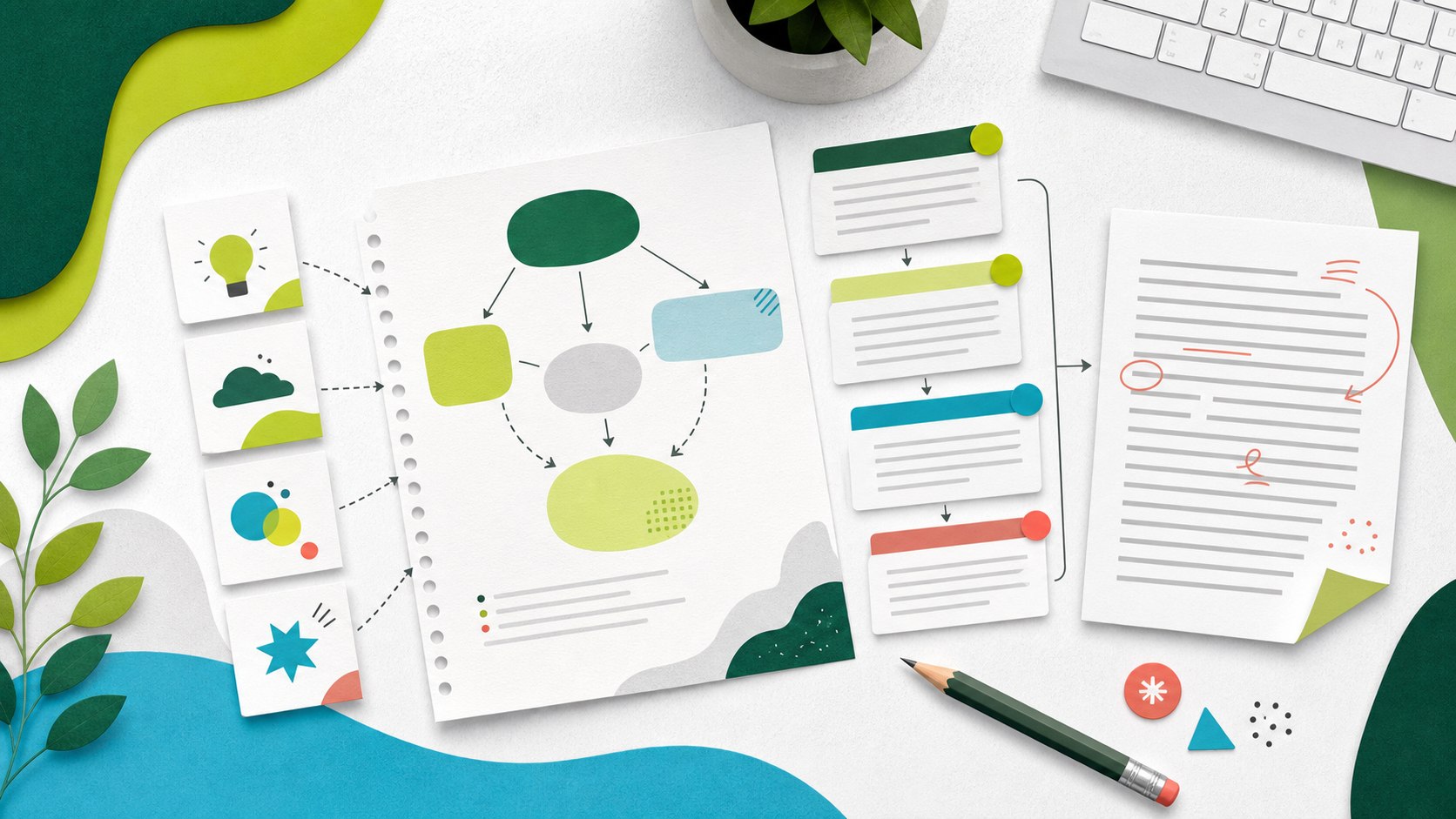
- Plan ideas
Choose the purpose, audience and strongest ideas.
- Organise paragraphs
Group related ideas in an order the reader can follow.
- Draft
Turn the plan into complete sentences and paragraphs.
- Revise
Improve meaning, structure, word choice and accuracy.
Year 5 Writing skill map
1. Audience, position and text type
What this part checks: Maintaining a clear purpose for a reader in either a narrative or persuasive response.
What your child may be asked to do: Establish a position or situation early, then select details that suit the expected reader.
What to look for afterwards: Does the response remain purposeful, or does it drift into a different topic or text type?
2. Purposeful overall structure
What this part checks: Using an introduction, logically ordered body and conclusion, or a controlled narrative sequence with a clear resolution.
What your child may be asked to do: Plan the job of each paragraph before drafting rather than deciding paragraph breaks only by length.
What to look for afterwards: Can the student label the purpose of every paragraph in a few words?
3. Developed ideas and examples
What this part checks: Explaining reasons, consequences, characters or settings with relevant and concrete detail.
What your child may be asked to do: Extend a reason with how, why or an example, or develop a narrative event through action and consequence.
What to look for afterwards: Is the added detail doing useful work, or is it decorative description unrelated to the central idea?
4. Cohesion and paragraph control
What this part checks: Linking ideas through reference words, connectives and paragraph progression without repetitive formulae.
What your child may be asked to do: Connect one paragraph’s ending to the next idea or track a person or concept clearly across several sentences.
What to look for afterwards: Are links clear and varied, or does every paragraph begin with the same connective?
5. Sentence variety and precise vocabulary
What this part checks: Combining simple and complex sentences for clarity and selecting words that suit purpose and audience.
What your child may be asked to do: Revise a group of short sentences or separate an overloaded sentence, then choose one precise verb or noun.
What to look for afterwards: Did variety improve meaning, or did the sentence become harder to control?
6. Meaning revision and final editing
What this part checks: Improving ideas and clarity before checking grammar, punctuation and spelling.
What your child may be asked to do: Reread once for whether the response makes sense, then again for sentence boundaries and word accuracy.
What to look for afterwards: Did the student spend all review time correcting surface errors while leaving a missing explanation or unclear idea?
Development example: see how the explanation should work
Basic idea: Our school should have a quiet reading space.
A developed paragraph states one reason, explains who benefits, gives a concrete example, and links the example back to the proposal. Adding unrelated adjectives does not develop the argument.
This Writing example is separate from the practice tests, so you can discuss it without giving away an answer from the papers.
Let your child lead part of the discussion and explain the choice in their own words. Ask what the writer wants the reader to understand, think or feel. Then discuss which detail, paragraph or sentence helps that purpose most. You can also ask: Which part is doing a clear job for the reader, and which part needs development?
After Practice Test 1: Year 5 Writing
Ask your child to explain one successful choice and one answer they would now change, rather than reporting only a total.
Ask: Which part is doing a clear job for the reader, and which part needs development?
- On the first review, read the response aloud and say what the main idea or purpose seems to be.
- For the practice session, choose one paragraph and ask what job it does for the reader.
- Before choosing another test, revise one small section for clearer meaning before correcting spelling and punctuation.
Do not try to fix the whole response at once. Choose one repeated issue that would make the biggest difference to the reader, then revise a short section.
Agree on a specific skill and a checking habit, then let your child help decide when to try the next set.
Your role with a Year 5 child
- Ask the student what they remember about the assessment before supplying an explanation.
- Agree on a realistic session length and break point.
- Let the student flag uncertain questions rather than seeking immediate adult confirmation.
2026 national context for Year 5 Writing
Writing
65.6% of participating students were reported at Strong or Exceeding nationally.
10.3% were reported as Needs additional support.
ACARA advises caution when interpreting 2026 writing results for Years 5, 7 and 9 because of a technical disruption on 11/03/26. ACARA reports that the national writing results were minimally affected and can validly be reported.
These figures describe results across Australia. They do not explain what happened in your child’s attempt. During your child’s explanation, read the response for meaning first, then look at paragraph purpose, sentence control and the changes made during revision.
For a child building independence, use the national figures only as background. The response itself will show which part of the writing process needs attention next.
A total from an Ezy Math Year 5 Writing practice test is not an official NAPLAN scale score. When you plan the next practice, use your child’s work rather than a comparison with the national percentage.
Questions parents ask about Year 5 Writing
What should I notice first in a Year 5 Writing attempt?
When you review the first paper together, read the whole response once for meaning. First decide whether the reader can follow the idea and structure, then look at sentences, punctuation and spelling.
When should my child open Year 5 Writing Practice Test 2?
Return after focused practice and ask what your child plans to do differently before opening the paper. Once the agreed practice is complete, practise the chosen part of writing through a short paragraph or revision task. Use Test 2 only after your child can say what they are trying to improve.
Related NAPLAN resources
If focused practice does not help, show the teacher or tutor the full response and one passage that illustrates the problem. Do not bring only a list of spelling mistakes.
Official information used for this guide
The Year 5 Writing format and 2026 national figures were checked against the official NAP and ACARA sources below on 22/08/26.
What they say about our tutoring
Mitchell is happy with the new tutor, thank you. Sean is a good communicator which makes Mitchell feel more relaxed thanks again.
We are very happy with Sheetal. Timothy is making great progress and we are happy to continue. We will have Tim do his Navy test in a few weeks and if we need to do a bridging course we will ask Sheetal to tutor him with that as well.